By Gary Patton
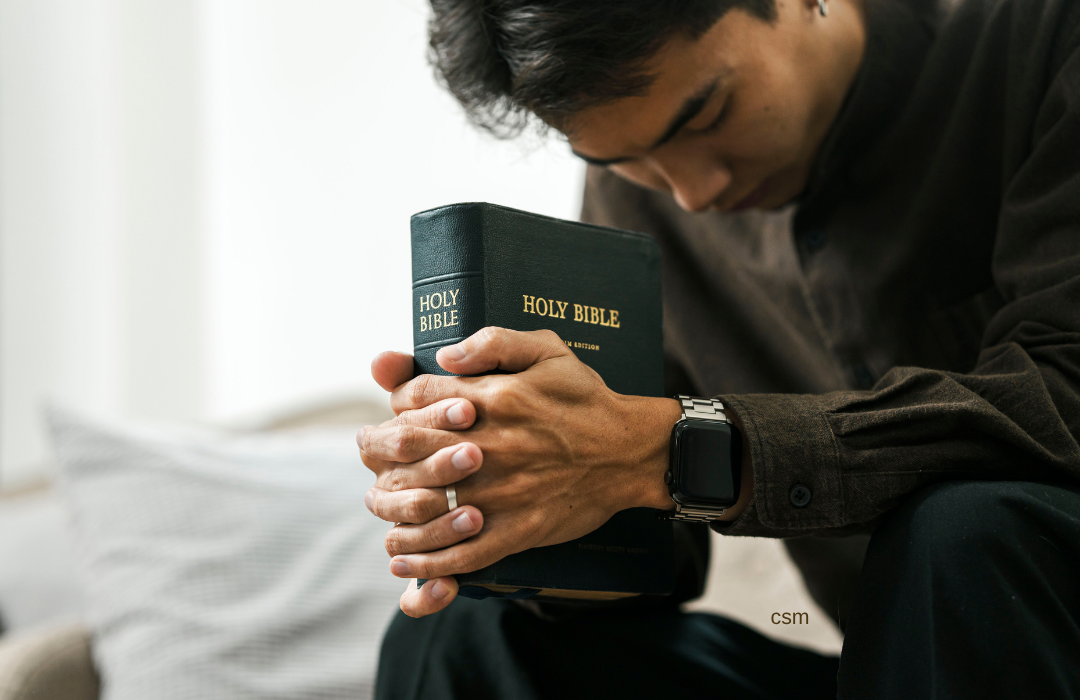 Hebrews 9:15-17
As a Christian, how are you walking (conducting yourself)? How is your faith? How do you perceive? How do you evaluate life matters? How and why do you desire a certain way? How do you decide the best course of action in any case?
In all of these questions, there is a common action that takes place in all of us that is at work. It is our “conscience” discerning these situations.
But is our conscience subject to its own moral standards or a standard that is greater than itself?
Why is the question of conscience at issue?
It is because whatever thoughts, imaginations, desires, opinions, attitudes, choices and behaviors, that we express, will be based on what our conscience considers to be good.
The human conscience left to itself is sinful at best. That’s why under the old covenant system God provided an animal as scape-goat (entire removal of transgression) for those who, though in sin, were willing to obey Him, (Hebrews 9:11-14; Leviticus 16:7-10; 26).
This service was performed by the High Priest in the Most Holy Place of the Tabernacle.
This was a type of the true priesthood of Christ in the new covenant Who as “The Sacrificed One,” bears the works of “Mediator and Testator,” meaning that because He possessed divine and human nature without sinning, as the “go between guarantor,” He is the One that we can access relationship with the Father through and He is also the One who made and enforced the new covenant (will) in acting as Arranger for the disposition of things promised by His own death (Heb. 9:15-17). These verses state: “And for this reason He is the Mediator of the new covenant, by means of death, for the redemption of the transgressions under the first covenant, that those who are called may receive the promise of the eternal inheritance. For where there is a testament, there must also of necessity be the death of the testator. For a testament is in force after men are dead, since it has no power at all whiles the testator lives.”
Animals blood (death) could not enforce a covenant, yet they were used as a type because they have no sin conscience. This shows the comparative superiority of the promises and works through Christ Jesus in the New Testament to that of the Mosaic Testament.
Jesus, who was the true sacrifice, offered Himself to God for man’s sins once for all, not annually, (vs. 12). He is the Mercy Seat (Expiator or Atoner) sent from God the Father to the Cross and back to the Father.
In making a testament, Jesus has disclosed God’s unilateral disposition concerning the moral standards for which He desired of man’s heart, behavior, and “covenant obedience (Exodus 24:6-8; Mt. 26:28; Mk. 14:24; 1 Cor. 11:25-30; Heb. 9:19-20; Exodus 20:22-23:33).”
Based on these biblical references, what manner of thinking, choices, behaviors, is Jesus Christ, “the Covenanting One” targeting as acceptable to the reason of His death? Isn’t it that which demonstrates out of reverence for Christ, “goodwill, sacrifice and benevolence,” to brethren and neighbors?
Which of these thoughts, choices, and behaviors, are in accordance with His promised future inheritance to those who keep His covenant? We know that His death was to destroy the guilt and shame that came through the first covenant law when violated under Moses. The works of the OT worship system were considered dead because the law had preeminence in man’s conscience as they worshipped the Lord God in their faults.
The sacrifices offered then were faulty in completely redeeming the heart and conscience of the worshippers. Every time an animal was slaughtered, there was still a sense of guilt because of the limited power of those sacrifices that could not accomplish the true inner condition that God desired for His people because, those sacrifices were just “copies or shadows” of the true sacrifice.
Because Jesus is Son of God and Son of man, without sin, He was and is qualified to provide through Himself, redemption, forgiveness, sanctification, and purity, from sinful influences in the life of His people through His Priesthood covenant.
So, what does this tell us about His Priesthood?
In Psalms 40:6-8;Hebrews 10:5-10, the body of Jesus was prepared and offered to God to fulfill His covenant requirements that purifies us from sin and guilt. As Mediator and Testator, His person, work, and covenant (testament) making is the answer against every sinful or unjust matter among people, even today.
Is Jesus your “High Priest, Mediator, Testator?”
Since the death of Christ validated the New Testament, what did Christ validate? “The new covenant conscience” (Hebrews 9:14). A completely expiated conscience permanently ratified by the blood and words of Christ in us to be competent ministers for living works (2 Cor. 3:5,6). The new covenant conscience in Christ is regulated through “covenant resolution.” This is the promise that was made in Jeremiah 31:31-34; Hebrews 8:8-12; 10:15-18. How does this promise improve our conscience under the second covenant? Christ through the Holy Spirit will:
1) fix His general divine will in our understanding, feelings, and desiring faculties in a way that cannot be removed or forgotten.
2) He inscribed His precepts on the hearts of His people so that we would cleave to them and to Him through them. He is the relationship initiator by His own blood.
3) We would acknowledge God as our deliverer, the only and true God through our lives as His people.
4) Through His indwelling influence each of us can know the Lord.
5) As we continue to cleave to Him, our sins are no longer remembered by God.
What is the purpose of all these works of God? Through Christ, God is perfecting us (our conscience) according to sanctification (Hebrews 10:14), to be about love and good works (v24). Since these Christians were facing persecution, some out of fear stopped meeting. The exhortation is to think carefully about each other, how to encourage one another, to have warm regard for or interest in another besides themselves, this is love.
Good works (kalos) in Greek is derived from three descriptions: that which is “healthy, actively strong, and whole.” The word means “beautiful, excellent, eminent, choice, useful, commendable,” etc. It speaks to things done through the beauty of one’s purity of heart and life, “morally good.” This state is determined by who your covenant relationship is with, who is fixing their laws or philosophies in our conscience. So, who has control of your conscience? If Christ and His words then, this should lead to loving and active deeds that demonstrate love and health.
If someone other than Christ, like media and social media, man’s politics, the news channels, these can lead to dead works. These can influence worldly partiality, prejudice, politics, not love, grace, mercy, unity, consideration of others. We should not be standing against each other in Christ, if we are representing Christ as the “Relationship Initiator” of them who are willing to let His law be written in their hearts.
The world needs to see the covenant people of God as “mediators and relationship initiators in Christ!” Jesus lived out all of these roles while here because He desired a eternal relationship with mankind, and eternal unity in Christ between covenant people, Mark 14:23-25; Luke 22:20. Listen to the words, “Then He took the cup, and when He had given thanks He gave it to them and they all drank from it. And He said to them, “This is My blood of the new covenant, which is shed for many. Assuredly, I say to you, I will no longer drink of the fruit of the vine until that day when I drink it new in the kingdom of God.”
There is a destined fellowship planned for Christ and those that adhere to His covenant law. The people of which Christ precepts has not been removed from their hearts will be eternally destined with Christ after the judgment. Will that be us? Whose doing the writing in your heart? Who controls or influence the decisions of our conscience? We must and will answer this question in our daily lives!
Short Study
Hebrews 9:15-17
In order for the Christian to obtain a morally purified conscience, it is important that the works that Christ does as “High Priest, Mediator, Testator,” be acknowledged as the influence in the life of His people. As High Priest, Christ dwelled in Heaven (the most holy place) and was sent to offer Himself for man’s sins. As the essential Mediator, because He is “Son of God and Son of Man,” He is the “Go Between Relationship Guarantor” and only access between God and man. As Testator (diatithemi), meaning “to place separately, arrange, dispose, appoint.” He is the Arranger who disposes God’s promises and Enforcer of the The last will and Testament (covenant), better known as the “Covenanting One.” What is His purpose? Eternally active relationship with them that would obey and heed His law, (Mark 14:23-25; Luke 22:20). How does He accomplish this?
- Fix His law in their new intellect (made spiritual) so that it cannot be removed.
- He engraved His precepts in our hearts through the Spirit so that we would cleave to Him, but also, live our lives to become like written letters as a message from Christ Himself to the world, 2 Cor. 3:2-3.
- God would be deliverer and gatherer of His covenant keeping believers and they would acknowledge and devote themselves to Him, Hebrews 8:10; Zechariah 8:8.
- All of those of whom the Lord engraved on their hearts His precepts, will actively have the precepts of God and Christ no matter what their human status be.
- As the Christian cleaves to God in keeping His precepts, God’s mercy will not allow Him to remember our temporary lawless ways.
Questions
Who’s minds and hearts does God put His precepts on? Look at (Ezekiel 11:1-19; 36:16-29).
Answer: Those who through the Lord God received physical and spiritual deliverance from the power and influence of corrupt political-religious leaderships. From idolatrous influence. From sin and the flesh.
Political resolutions vs. Covenant resolutions
Application Questions:
Did the Lord deliver us from sin and the flesh in order to side with political parties or platforms of a particular designation or person ultimately, or to be identified as His people? Exodus 24:3; 20:3-22:33
Does your political support willfully promote “idolatry, misrepresent the Lord’s holy name, take authority away from parents, violate God’s institution of marriage between male and female, promote murder, false witness, stealing, envying, etc.?
Does the attitude that you display in your political stance as a covenant person in fellowship, hurt or damage opportunities, that are helpful to a wholesome quality of life for your brother, sister, or anyone else who seeks to do well in life?
Because of how politics and elections are set up, is it possible for the children of God to vote at the polls for every matter that God has deemed righteous and good on man’s ballots?
Is it possible that if as the body of Christ, if each of us vote for a good solution to improve problem situations for our society and continually pray against the sinful things that we can’t vote against in the polls, that God, our “Delivering One,” can supersede man’s power for the health of the nation?
As covenant people of God, while it is important to vote for the best possible candidates and policies that fit God’s interests, should we fully look towards officials for answers or should the church do the works of the gospel in Christ that a Democracy or Republic system cannot accomplish?
How does the Lord God fix and inscribe His precepts in the hearts of His people?
Look at Ezekiel 11:13-21;Romans 2:4-5.
Answer: Looking at the action of the remnant of Israel, listening to the Lord’s instructions unto obedience. Through listening and obeying in constancy, a fixed spiritual mind and inscribed heart is developed in the believers conscience by the Lord.
Application Questions:
If God has fixed and inscribed His precepts in our hearts, then, what idolatrous attitudes, behaviors, decisions, in us or our society are we aware of that must be torn down? (Look at Ezekiel 8:5-18). For example, anything that is a rival against God for our life devotion. “Love of wealth, power, intelligence, fame, or _________, above God and people.”
Since God causes us to cleave to Himself through the covenant relationship and precepts that He inscribed on our hearts, should this lead us to regard the cause of “America, the Flag, the National Anthem, the way that the Constitution and its amendments or policies are applied, above the holy constitution that Christ’s sacrifice represents?”
Does God’s precepts inscribed in our hearts lead our conscience to be partial to one morally wrong ideal or behavior above other wrongs or cause us to see all wrongs as wrong? (Example: “Abortion” (murder) vs. “unfair taxation between socioeconomic classes.” God’s word for both issues: Gen. 9:6; Deut. 5:17, “murder “ and “being partial,” Proverbs 11:1; Leviticus 19:11-15).
Beyond voting in elections, in what ways are we actively promoting God’s righteousness against these idols? (Col. 3:1-2)
If idolatry promotes murder, abortion, partiality of goods and services for or against particular ethnic groups, socioeconomic classes, the working poor, gender, or other, knowing that Jesus offered Himself for the eternal salvation of everyone who would believe, should God’s people do their best to vote and pray for persons and policies that benefit the welfare of all people in their circumstances?
Personal examination of self condition
Since Jesus as Son of God and Son of Man is the High Priest, the Mediator, and the Testator, from heaven who offered Himself as the Scapegoat for our sins, reconciles us to God and validated the new covenant,
writing His law in the faculty of our intellect and our inner man, what moral affect should He have on our conscience towards Him and one another in Him, if He came to offer Himself for many? Look at Hebrews 10:23-26.
Since as High Priest, the blood of Christ has cleansed our hearts and reformed our moral/ ethical standards, should our conscience continue to accuse us in the future for past choices and habits if God no longer remembers them? Look at Hebrews 10:16-18. Pray concerning this!
Since the conscience is given the ability to convict or approve our thoughts or behaviors based on God’s moral standard, are we aware of whose influence or what standard is being justified in doing so within ourselves (Romans 2:15)? (For example, the person and words of Christ vs. someone and their traditions or ideals)?
Do you truly believe that Jesus as “High Priest, Mediator and Testator” offering His Body and Blood once, is enough to “cleanse, justify, and sanctify,” you that you may be able to experience a healthy outlook of yourself, your deeds and fellowship with God? (Look at Hebrews 9:11-14;10:12-18) Pray about this!
Since we are called to confidently approach God through the sacrifice of Christ, the pardon of sin and fellowship with God, dedicated through Christ, do you still approach Him with a “consciousness of sin” or “consciousness of complete atonement,” in entering that fellowship? (Hebrews 10:19-22)
Do you approach your different roles out of a consciousness of sin or a disposition of atonement concerning yourself? In other words, self shame or condemning disposition or disposition of inner justification and freedom? (For example, marriage, parenting, education, work, etc.).
Since some are in the habit of forsaking, what reason justifies one’s conscience in Christ, to forsake covenant fellowship with God and each other if we are called to hold on to our allegiance to Christ as our High Priest? (Look at Hebrews 10:19-27).
Summary Perspective
It is important to understand that since the conscience discerns that which is morally good or evil through the condition of that which influences the heart of a person. Because of this, whatever condition that the heart or soul is experiencing, the conscience draws from it. The conscience helps the will of a person to act on information from what affects the human senses, that is, eyewitness, hearing, smelling, feeling, tasting. It helps us to determine what we believe or not believe. It can also motivate acts related to attitudes of Indifference, partiality, prejudice, oppression. It could lead to conditions such as: belittling one’s self or others, jealousy, anxiety, depression, self shame, lack of self drive, and things like these.
Ultimately, the conscience can make us aware of when, how, and why, our moral standing is right or wrong before God through the commands and precepts of Christ. In other words, our conscience matches our attitudes, desires, choices, and behaviors, with the moral or immoral standards that enlightens, convicts, or pressure our hearts that we meditate on whether it is the words of Christ or the traditions or philosophies of man. Our conscience can even affect our confidence in learning and aptitude, our ability to build successful relationships with others. Jesus our High Priest, Mediator, and Testator claims that His blood purifies our hearts and conscience from evils that hinder the good works in all of these matters.
Proclamations about Christ
Jesus as the “Original High Priest and Scapegoat” (remover) of my entire sin and guilt is, “the Sacrificed One“ for my atonement.
Jesus as Mediator is “the Accessing One between The Father and I”
Jesus as Testator is “the Disposer of His covenant precepts and promises that He has inscribed within me.”
Jesus as the Covenanting One is the “Relationship Guarantor!” He communes with me. I belong to Him.
The complete goal of this work
- To admit that someone or some immoral philosophy or tradition of man had an influence on my heart and conscience
- To admit when my attitude and behaviors are not according to the new covenant heart and conscience
- To acknowledge Jesus as the Most Holy One, Whom we have blessed relations with the Father through and writing in us that our transformed lives can be a holy message to the lost.
- To develop out of a purified heart and conscience a purified disposition towards one another in the body of Christ that is not partial against each other on the basis of “party, class, status, rank, nationality, gender, performance, etc. or any man-made condition.
Practical life Application
- Acknowledge and adhere to all of the teachings of Jesus Christ, your High Priest, Mediator, and Testator, as they apply to the specific areas in your life of falling short of God’s glory
- Pray for God’s power and wisdom in His word and the word of His Son placed in your heart, to equip and empower your conscience to produce healthy covenant works and behaviors.
- Through the reception of the word of the Testator, believe that your conscience has been purified, freed from the guilt and shame of the sinful flesh.
- Conduct your lives, that is, your thoughts, decisions, choices, imagination, desire, and behavior, according to the atoning, redeeming, cleansing, justifying, consecrating, actions and teachings of Christ that saves you from eternal death.
What is your conscience doing for you or against you while in Christ?
God’s covenant goal for us is that His Son’s living and active gospel that is spoken to us in Christ develops in us a redeemed, atoned, holy reformed conscience that by faith is resolved to do living works, not dead works.